

Hotel stone restoration should begin with a material-specific assessment and an agreed result. A dull lobby floor, an etched vanity and a stained threshold can look like similar appearance problems while needing different work. Cleaning, refinishing and repair are not interchangeable.
This guide helps hotel teams commission and verify a suitable scope. It is not a do-it-yourself polishing procedure, a chemical recipe or a guarantee that every surface can return to its original condition.
1. Identify the Stone and Finish Before Hotel Stone Restoration
Collect the stone name, installation location, intended finish, previous treatments, care instructions and service history. Distinguish natural stone from ceramic, engineered surfaces and terrazzo rather than treating every stone-look floor as marble. Keep uncertain identification visible until it is checked by an appropriate supplier or specialist.
The Natural Stone Institute’s care guidance explains that stone composition affects cleaning compatibility. Calcareous stone is sensitive to acidic solutions; even a stone generally resistant to common acids may contain sensitive minerals. A generic cleaner or stronger chemical is not a substitute for knowing the surface.
Document the finish the property actually wants to preserve. A honed surface is not simply a polished surface that failed to shine. Agree on the target appearance with the responsible team before a contractor begins changing it.
2. Separate Soil, Staining, Etching and Physical Damage
Describe the observed condition before deciding what caused it. Record the area, appearance, timing, reported exposure and relevant photographs. Compare the finding with the cleaning and treatment history, but do not diagnose a surface from one photograph alone.
The Natural Stone Institute’s stain-removal guidance distinguishes staining from etch marks and notes that a material can both stain and etch. It also warns that some stains may never be completely removed. That supports a qualified assessment, not a promise that one cleaning service will correct every mark.
- Loose soil or cleaning film: assess a suitable cleaning scope and check the dry result.
- Localized staining: investigate the likely source, stone and treatment compatibility.
- Etching or worn finish: ask whether an appropriate professional refinishing process is needed.
- Cracks, loose material, uneven edges or recurring moisture: keep these separate for suitable repair or technical review.
For recurring deposits or dampness, investigate the source rather than repeatedly removing the visible symptom. Do not allow an appearance improvement to close a structural, installation or moisture finding that remains unresolved. The hotel inspection deficiencies guide explains how to assign and verify separate corrections.
3. Agree on the Hotel Stone Restoration Scope and Test Area
Ask the specialist to explain what the proposed work addresses, what it does not address and what change in appearance is expected. Separate cleaning, stain treatment, honing, polishing, repairs and optional protective treatment in the scope. Avoid buying an undefined package described only as making the floor look new.
A product-specific example shows why the details matter. LATICRETE’s STONETECH Polishing Powder datasheet identifies particular substrates, professional use and a small-area test to check the intended result. It does not establish a suitable method for every hotel stone. The appropriate contractor should confirm current product availability, instructions and compatibility for the actual project.
Agree on a representative test area and review its result under the conditions used to assess the finished work. Record acceptable appearance, remaining limitations and any difference between the sample and surrounding stone. If the proposed result is unacceptable, revise the scope before extending the treatment.
The Natural Stone Institute’s restoration and maintenance syllabus is a resource for training restoration employees. Its existence is not proof that a particular contractor is trained, certified or approved. Verify the contractor’s relevant experience directly rather than implying an endorsement from a source link.
4. Treat Sealing as a Separate, Product-Specific Decision
Sealing is not the automatic final step in all hotel stone restoration. The Natural Stone Institute says many stones do not require sealing and that an impregnating treatment improves resistance to staining rather than making stone stain-proof. Confirm the stone, absorbency, prior treatment, intended use and supplier guidance before approving one.
LATICRETE’s sealed-stone testing and treatment guidance, revised April 2026, discusses differences in absorbency and existing treatment. It explicitly notes that sealers do not prevent acid etching on acid-sensitive stone. A proposal to seal should therefore not be presented as a correction for an etched finish.
A STONETECH BulletProof Sealer label illustrates product-specific preparation, testing, ventilation and curing requirements. Those instructions belong to that product. Do not borrow its drying time, application rate or reapplication advice as a universal hotel rule.
Have the responsible specialist document the suitable treatment and reopening requirements. Keep any proposed change in color or finish explicit. Protection is not permission to stop routine care or a guarantee against future staining.
5. Plan Access and Verify the Hotel Stone Restoration Handback
Coordinate the work with operations before reserving the area. Define guest and staff routes, furniture responsibilities, protection for adjoining materials, access restrictions and the handback process. Include the actual method’s drying or curing requirements without promising a generic reopening time.
Use the high-traffic hotel cleaning guide for phased access planning. Keep cleaning and restoration records connected to the hotel asset condition inspection record, so remaining repairs are not lost when specialist work finishes.
Review the completed area against the agreed test area and acceptance criteria. Check the intended appearance, treatment residue, adjoining surfaces and open findings with the responsible team. Shine alone does not certify slip resistance, safe use or legal compliance. Record who accepts the handback and any condition that prevents reopening.
For example, a lobby has worn appearance along the main route and an uneven edge at a threshold. A suitable refinishing scope may address the appearance, while the edge needs its own assessment and correction. A satisfactory finish should not automatically close the threshold finding.
6. Preserve the Result With a Recorded Care Plan
Update the record with the stone and finish, approved process, products where relevant, work date, checked result and limitations. Keep the current care instructions available to housekeeping and engineering. Review equipment, entrance soil control and recurring exposures that may contribute to repeat findings.
The Natural Stone Institute identifies sand, dirt and grit as abrasive and warns that worn vacuum attachments can scratch some stone. Follow suitable product instructions for ongoing care; do not turn a restorative process into the everyday cleaning routine. Use the hotel preventative maintenance strategy to assign ownership and review the plan as conditions change.
Discuss a Stone-Specific Restoration Assessment
For hotel stone restoration support, contact Renue Systems or find your local team. Share the material records, affected area, finish requirement, service history and access window. Confirm an appropriate assessment and scope without assuming every defect is reversible or promising a fixed extension of service life.
Return to the Hospitality Resource Center for related planning guides.
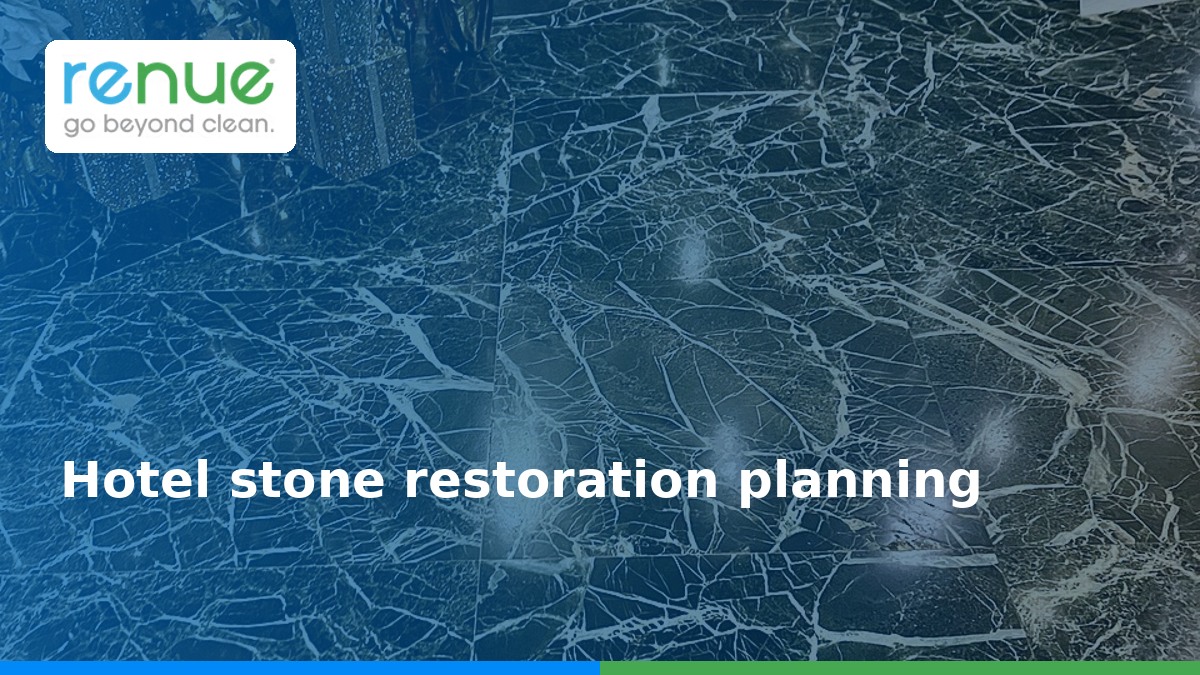
Illustrative photo: Green marbled foyer at the Millennium Hilton Hotel, photographed in 2024 by Bigeez, CC0 1.0. Cropped, color-adjusted and overlaid with Renue branding and text. Pictured property is illustrative, not a claimed client or verified current condition.
