


These maintenance planning resources help hotel teams move from a list of jobs to an agreed plan. Choose the guide that matches the immediate question: what work belongs in the calendar, when access is possible, who owns the handoff or what evidence supports the budget.
This collection brings together seven practical guides. It is a reading route for operations, housekeeping, engineering and finance discussions, not a maintenance specification or a replacement for current manuals, brand requirements, qualified assessments and the property’s approval process. The guides do not prescribe one cleaning frequency for every hotel or promise a particular saving.
Maintenance Planning Resources for the Work Calendar
Start with a defined task and a timing basis
Use Creating a Preventative Maintenance Strategy for Hotels when the team needs to turn broad intentions into identifiable work. Its seven steps cover scope, task instructions, priorities, a maintenance calendar, capacity, completion evidence and review.
Bring the asset or zone list, available care instructions, open findings and known access limits. The calendar section includes fields for the timing basis, due date, proposed window, owner, performer and closure record, plus two example entries. A preferred access window and a required due date are separate facts. The guide helps record both rather than quietly moving overdue work forward.
Plan periodic cleaning by task, material and condition
Read How Often Should Hotels Schedule Deep Cleaning? when a single recurring entry no longer explains the actual work. The guide separates task-specific care instructions, condition triggers, seasonal influences, access and return-to-use checks.
Use it to review the installed product’s instructions and the evidence behind each planned interval. Its seasonal framework considers local weather, events and operating conditions rather than assigning the same calendar to every property. The sample record shows how a team can document its own basis; it is not a universal service schedule.
Maintenance Planning Resources for Busy Operating Periods
Connect peak occupancy with usable work windows
Choose High-Traffic Hotel Cleaning Before, During and After Peak Occupancy when guest movement, events and cleaning projects need to be planned together. It covers zone mapping, capacity, surface-specific scope, phased access, routine care during the peak and the review afterward.
Bring the booking and event outlook, material information, proposed project boundaries and unresolved access conflicts. The guide helps the team discuss which work is due, how routes remain usable and what happens if the intended window disappears. It does not treat peak season as permission to shorten required steps or deep clean every surface automatically.
Make ownership and handoffs explicit
Use Hospitality Asset Management Best Practices when departments share a plan but responsibility is unclear. Its focus is objectives, one usable asset record, named handoffs, work evidence, measures and meetings that end in decisions.
Bring examples of work that was requested but not accepted, completed but not checked, or postponed without a decision owner. Use the guide to agree who owns the next step and what evidence they need. This is an operational framework, not an investment-management service or a claim of conformity with an asset-management standard.
Maintenance Planning Resources for Budget and Decision Records
Turn the proposed work into a checkable estimate
Start with Budget Planning for Hotel Maintenance when the calendar must become a working budget. It covers scope, existing work records, current condition, the distinction between maintenance and replacement, quote-based estimates and forecast changes.
Bring the budget period, approval route, relevant service reports, existing contracts and current quotes. Its worksheet fields help make assumptions visible. An estimate in a plan is not a supplier commitment or permission to spend. Finance still decides the appropriate classification and approval process.
Keep deferred work and alternatives visible
Read Reducing Capital Expenditures Through Hotel Maintenance when the team is comparing care, restoration, repair or replacement, or explaining work that has been deferred. The guide begins with the required result and compares complete options over a consistent period.
The deferred-work section distinguishes known costs, estimates and unresolved exposure. Use it to prepare a traceable decision rather than assume that a cheaper initial quote means a better outcome. The guide does not provide a universal deferral-cost multiplier or guarantee that maintenance can avoid replacement.
Preserve the history behind the next planning decision
Choose Understanding Hotel Asset Life Cycles when asset dates, condition findings, warranty terms and replacement assumptions are mixed together or missing. Its seven records cover scope, installation, separate planning assumptions, care history, review triggers, decision evidence and retirement.
Bring the records that are available and mark gaps as unknown. This route is useful before treating an estimated replacement year as a fixed deadline. It deliberately avoids a generic lifespan table for hotel carpet, PTACs, mattresses or stone.
Use the Maintenance Planning Resources in a Working Meeting
For a calendar review, start with the strategy guide and use the deep-cleaning schedule guide for the relevant cleaning tasks. For an approaching busy period, pair the high-traffic guide with the ownership and handoff guide. For a budget meeting, start with the budget guide and use the capital-planning and lifecycle records where a decision needs more evidence.
Keep the meeting bounded: choose an identified area or asset group, note the source of each task, record unresolved information and leave with an owner and a review point. Use the property’s existing urgent-work and safety procedures for immediate concerns; a reading plan is not a reason to delay them.
Discuss Your Property’s Planned Cleaning Work
Need help defining a specialist cleaning scope or coordinating suitable access? Contact Renue Systems or find your local team to discuss the property, materials, condition and intended work window. Confirm the actual scope, availability and reopening requirements before scheduling.
Return to the Hospitality Resource Center for other topic areas. The linked guides identify their own technical sources and limitations.
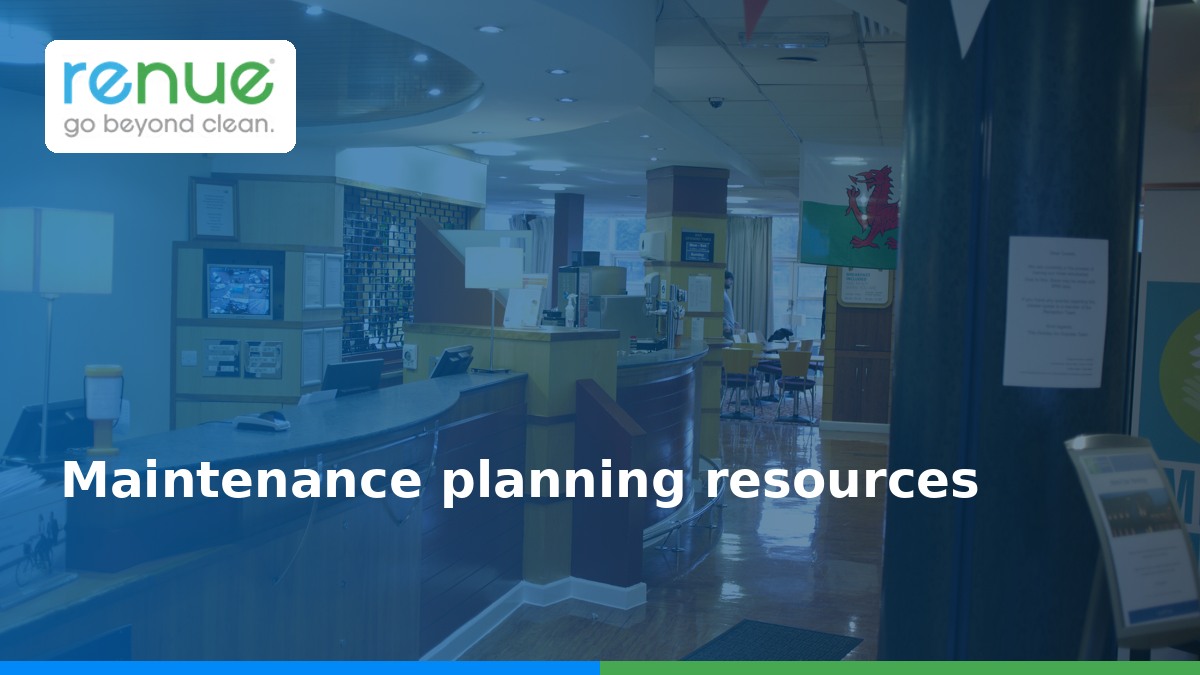
Illustrative photo: Hotel reception by Bob Harvey, CC BY-SA 2.0. Cropped, color-adjusted and overlaid with Renue branding and text. This adapted image is shared under the same CC BY-SA 2.0 license. Pictured property is illustrative, not a claimed client.
