

Hotel QA inspection readiness starts with the right standards, a truthful view of current conditions and a clear record of what has been corrected. Use the preparation steps and working checklist below to organize the review, assign findings and check completed work before calling an area ready.
This hotel QA inspection readiness guide is a practical framework for hotel teams. It is not an official brand audit, a regulatory inspection form or a guarantee of a passing result. Insert the property’s current requirements and use qualified people for technical checks. A clean appearance does not establish that equipment, fire safety or food-service requirements have been met.
1. Define the Hotel QA Inspection Readiness Scope
Identify which review is involved: a brand quality-assurance visit, an independent rating assessment, an ownership review or a regulatory inspection. Record the program, current document version, applicable property type, responsible manager and any confirmed dates. Do not treat a generic online checklist as the current requirements for a named brand.
The distinction matters. Forbes Travel Guide describes anonymous inspections that assess service as well as facilities, with an emphasis on service. The AA Hotel Quality Standards describe their own recognition scheme and criteria. Neither is a universal hotel brand checklist or a substitute for the rules that apply to the property.
Confirm unclear requirements with the program’s authorized contact. Keep the source and clarification with the working record. Do not invent a scoring weight, pass threshold or exemption to make the plan easier to complete.
2. Establish the Baseline Before Booking Corrective Work
Establish the hotel QA inspection readiness baseline from the previous report, unresolved work orders, recurring condition findings and relevant service records. Mark each previous finding as verified closed, still open or not yet checked. A completed invoice shows that work was billed; it does not by itself prove that the original issue was corrected.
Walk the actual areas with the relevant department leads. Separate observed soil or staining from damaged finishes, failed components, moisture concerns and missing information. Record the room or zone, asset identifier where useful, observation, applicable requirement and evidence. Keep guest names, booking details and other personal information out of the inspection record and photographs.
Use the property’s approved access procedures for guestrooms and restricted areas. Agree how areas will be selected for the internal review, including different room types and locations where appropriate. Do not describe an internal sample as proof that every room has been checked, or assume that an external inspector will use the same sample.
3. Use a Hotel QA Inspection Readiness Checklist
Copy these prompts into the property’s approved worksheet or inspection system, then add the actual standard references. Use statuses such as checked and meets the stated requirement, action required, not checked, or not applicable with a reason. Blank boxes and assumptions should not become a pass.
- Requirements: Is the current program document available, with its version, applicable areas and any authorized clarification recorded?
- Previous findings: Does each unresolved item have a named owner, next action and review point? Has claimed closure been checked against the original issue?
- Guestrooms: Have the selected rooms been reviewed for observed cleanliness, carpet and upholstery condition, furniture damage, visible dust, odors and the property’s documented presentation requirements?
- Bathrooms: Have accessible surfaces, fixtures, grout, seals, drainage concerns and visible defects been reviewed within the team’s competence and approved procedures?
- Public areas: Have entrances, lobby, corridors, lift lobbies, public restrooms and relevant meeting spaces been checked for cleanliness, material condition and usable routes?
- Equipment concerns: Are observed PTAC or other equipment issues referred to the appropriate qualified person, with the technical result recorded separately from appearance?
- Service and information: Have the responsible teams checked the service steps, staff knowledge and guest information required by the actual program, rather than preparing only physical surfaces?
- Corrective work: Is each proposed task defined by the actual material or equipment, approved method, qualified performer, access window and acceptance criteria?
- Required specialist reviews: Are applicable fire, life-safety, food-service and other regulated checks handled through the proper separate process, without being marked complete by a visual cleaning review?
- Reopening and closure: Have completed areas met the actual return-to-use conditions, and has the designated reviewer accepted the result or recorded the remaining limitation?
For each action-required or not-checked item, record: location; requirement reference; observed condition; evidence; immediate action under the property’s procedures if needed; accountable owner; planned correction; due date; access dependency; completion evidence; verifier; and final status. This creates a usable action record rather than a list of general topics.
4. Turn Findings Into a Realistic Corrective Plan
Use the property’s urgent-work and incident procedures first. An unsafe condition or active equipment concern should not wait for an inspection-preparation meeting. Staff should report and escalate within their training, not improvise a repair because an inspection is approaching.
For planned work, distinguish cleaning, specialist restoration, repair and replacement. A stain and a damaged material may require different decisions. Identify the installed material and approved care instructions before choosing a treatment. Use the hotel preventative maintenance strategy to document the task basis, owner, access and closure evidence.
Work backward from the actual review window only when it is known. Check contractor capacity, room access, supplies, method-specific drying and acceptance time before confirming dates. The hotel deep cleaning schedule guide helps separate the due task from a preferred work window. There is no universal requirement to book every cleaning service a fixed number of days before an inspection.
5. Verify Hotel QA Inspection Readiness With Evidence
Recheck completed work against the original finding and the relevant requirement. Record the date, reviewer, result and any remaining limitation. Where photographs help, use comparable views without guest information; do not use a favorable crop to conceal an unresolved condition.
Keep completion separate from acceptance. A contractor may report that its scope is finished while the hotel still needs to confirm the area can return to use. If a task is deferred, preserve the original finding, reason, decision owner and review point. Do not erase it from the log or mark it passed because a new date was entered.
Example record: Corridor Zone B; observed carpet staining; reference to the property’s applicable appearance requirement; approved material-specific cleaning scope; named owner and agreed access window; completion report; supervisor recheck; accepted result or a clearly described remaining stain and next decision. Populate the actual dates and criteria from the property, not from this example.
6. Keep Readiness Working After the Visit
Review the hotel QA inspection readiness process and the final report with the departments that own the findings. Tourism NI’s hotel quality-assurance guidance describes its own assessment, verbal debrief and written management report. That Northern Ireland scheme is an example of a feedback process, not a rule for every hotel.
Update the action log, task instructions or handoff where evidence shows a gap. Avoid promising a particular score improvement from cleaning alone: programs differ and may assess service, facilities and other requirements. For a broader reading route, use the maintenance planning resources.
Discuss the Cleaning Scope Behind Your Readiness Plan
For help assessing a specialist cleaning scope, contact Renue Systems or find your local team. Share the areas, materials, observed conditions and intended access window. Confirm the scope and acceptance requirements before scheduling; cleaning support is not an inspection certification or a promise of a passing score.
Return to the Hospitality Resource Center for related practical guides.
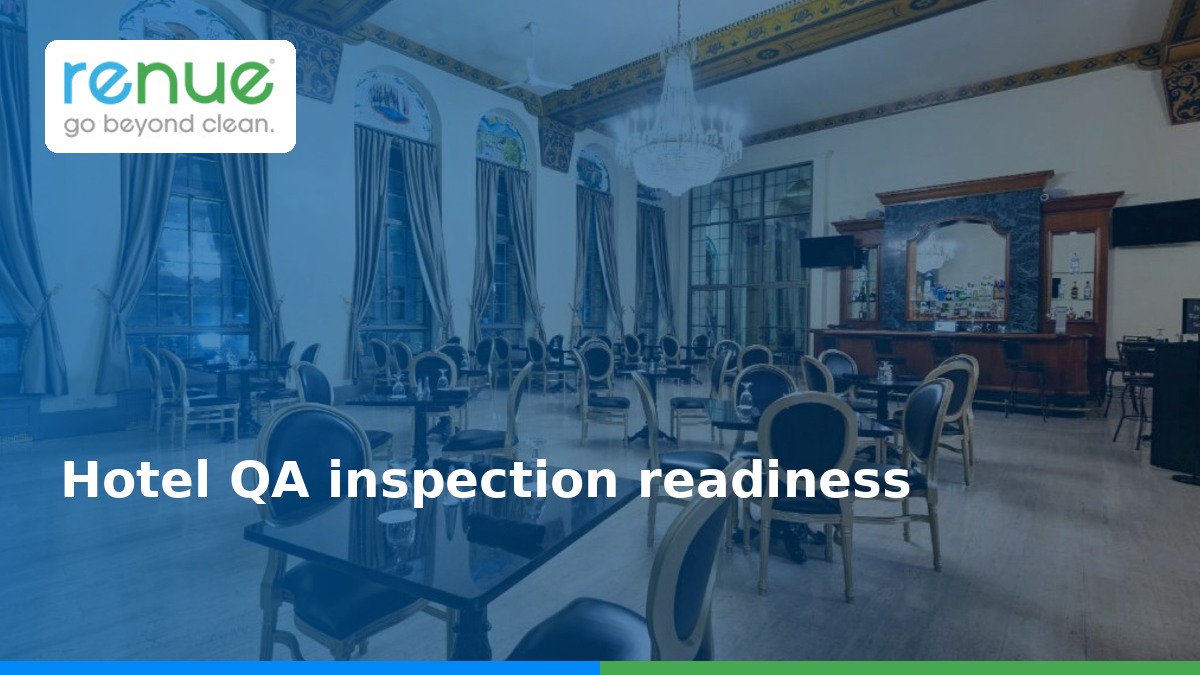
Illustrative photo: 2022 – Americus Hotel – Reception Area – Allentown PA by Atwngirl, CC BY-SA 4.0. Cropped, color-adjusted and overlaid with Renue branding and text. This adapted image is shared under the same CC BY-SA 4.0 license. Pictured property is illustrative, not a claimed client.
